Blogs
Drink Tracker vs. Sobriety App: What's the Difference?

A drink tracker and a sobriety app can look almost identical in the App Store. Both deal with alcohol. Both show you progress in charts and numbers. Both promise you'll feel better in a month. But an alcohol tracker and a sobriety app are built for two different people with two different goals, and downloading the wrong one is the fastest way to delete it by Friday.
If you're trying to cut back on drinking rather than stop entirely, that distinction matters a lot more than the star rating.
The Difference in One Sentence
A drink tracker counts your drinks so you can have fewer of them. A sobriety app counts your days so you can have none.
Everything else follows from that. The features, the language, the way each one defines a good week — all of it comes back to whether the target is “less” or “zero.”
What a Drink Tracker Is Built to Do
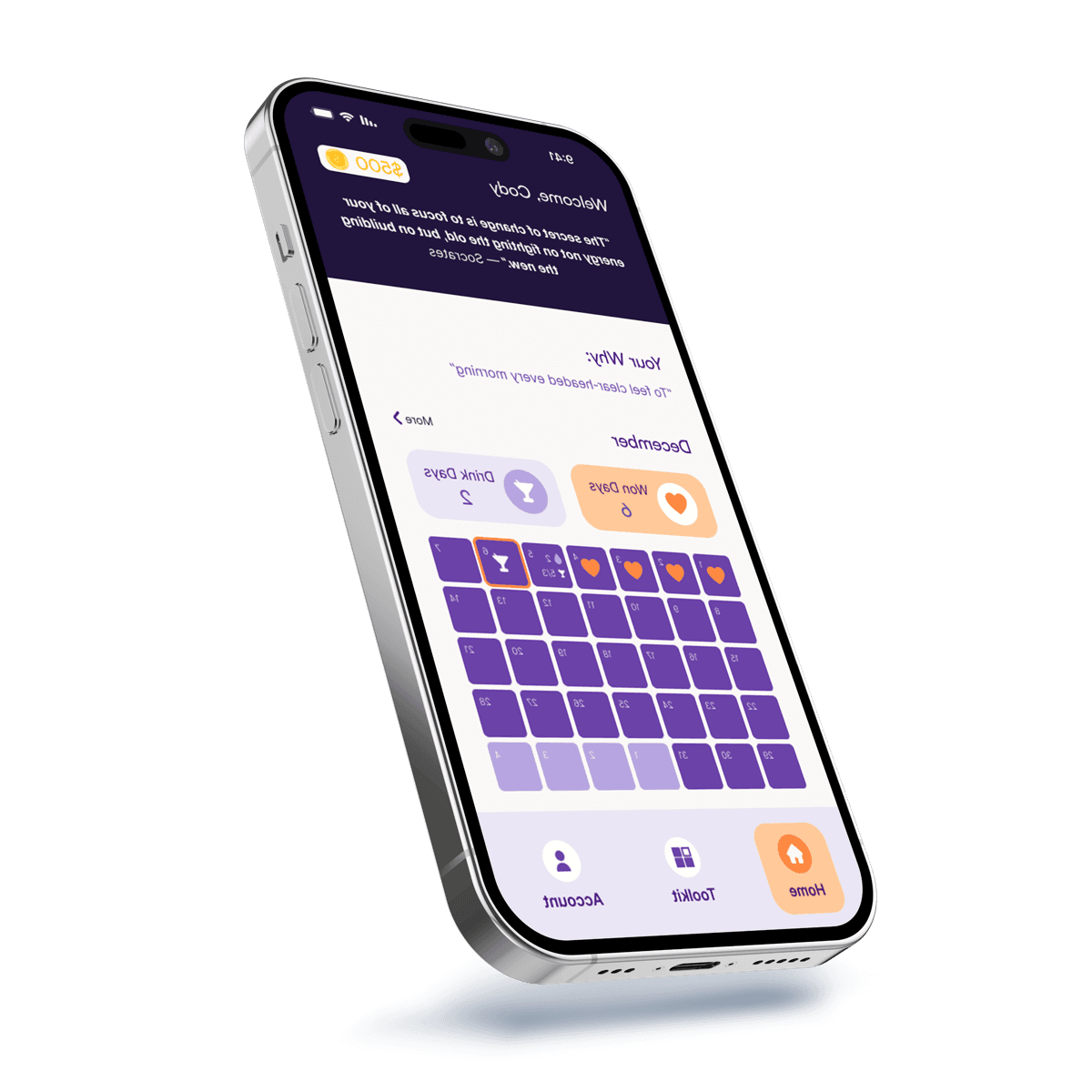
A drink tracker exists to give you information about a habit you already have. You log what you drink, and over a few weeks it hands you back the pattern: which days are heaviest, how weeknights compare to weekends, what your real monthly number is versus the one you'd have guessed.
Your Limit, Not the App's
In a tracker, you set the ceiling. Eight drinks a week, four, two on weeknights and open on Saturday — whatever fits the life you actually have. The app measures you against your own number instead of a number it decided for you.
That limit is a ceiling, not a quota. Hitting six when you allowed yourself eight isn't falling short of anything. Less is always better, and every drink you skip counts on its own.
Data Instead of Opinions
A tracker doesn't have a view on whether you should be drinking. It has your numbers. It shows you that eleven of your last fourteen drinks happened between Thursday and Saturday, and then it gets out of the way and lets you decide what that's worth.
No day counter resetting to zero. No moral scoring. You had three drinks on Tuesday; that's a fact, logged, and Wednesday starts from where you are rather than from the beginning.
What a Sobriety App Is Built to Do
A sobriety app is built for someone who has already decided to stop drinking completely. That decision is the starting point, not the destination, and the whole app is designed around holding it.
The Day Count Is the Whole Design
The central number is consecutive days without alcohol. Around it sit milestones, badges, and usually a community of people doing the same thing, plus money-saved and calories-avoided counters that all assume the target is zero.
For someone who's committed to quitting, that design works well. The count is motivating precisely because it's fragile — you protect it. There's real accountability in a number you don't want to lose.
But that same fragility is why these apps don't suit moderation. If your plan is two drinks on Saturday, an app whose main feature resets to zero every Saturday night isn't giving you information. It's giving you a weekly failure notice for doing exactly what you intended to do.
Drink Tracker vs. Sobriety App: The Five Real Differences
| Drink Tracker | Sobriety App | |
|---|---|---|
| The goal | Drink less, on your terms | Drink nothing |
| The main number | Drinks logged against a limit you set | Consecutive days at zero |
| A drink means | A data point | A reset |
| Social layer | Usually none — private by design | Often central — forums, check-ins |
| Who it assumes you are | Someone who wants to know more about a habit | Someone who has decided to quit |
Which One Fits You?
Forget which app is better. Neither is. The only question is which one matches what you're actually trying to do.
A Drink Tracker Probably Fits If...
- You want to drink less, not zero.
- You're not sure how much you actually drink and you'd like to find out.
- Weeknights are the problem and weekends are fine as they are.
- You want a private record, not a community.
- The idea of a streak resetting over one glass of wine sounds more discouraging than motivating.

A Sobriety App Probably Fits If...
- You've already decided to stop completely and you want support holding that line.
- A visible day count genuinely motivates you.
- You want other people around you doing the same thing.
- You've tried cutting back before and found that moderation doesn't work for you.
That last one deserves saying plainly, because we'd rather be useful than convert everyone. For some people, moderation genuinely isn't the easier path — stopping is. If cutting back has repeatedly gone the way you didn't intend, or drinking is affecting your health, work, or relationships, a tracker isn't the right tool and neither is any app on its own. That's a conversation worth having with a doctor. Alcohol Reboot is a tracker, not treatment, and it doesn't pretend otherwise.
What If You Pick Wrong?
Nothing dramatic. You just stop using it, usually within about two weeks, and typically without noticing why.
The usual version: someone who wants to drink a bit less downloads a quitting app because it had better reviews. Three days in, they have a glass of wine with dinner — exactly what they planned — and the app resets them to zero and shows a broken streak. Nothing went wrong, but the app says otherwise, so they close it and don't come back.
The reverse happens too. Someone who has firmly decided to quit picks a tracker, and the flexibility that makes it good for moderation turns into a nightly negotiation they didn't want.
Match the tool to the goal and this stops being a problem. If your goal is fewer drinks rather than none, you want to see what an alcohol tracker actually does before you decide, and you want a weekly limit you'd actually keep.
FAQ
Yes, and plenty of people do. Some want to understand the pattern first, then lower the limit gradually until it reaches zero on its own. A tracker handles that fine because the limit is yours to move.
Some do, including Alcohol Reboot, but they work differently. A streak here is a count of consecutive alcohol-free days — useful information, not a score you're failing when it ends. It's a record of what happened, and it starts again whenever you want it to.
Close, and there's a lot of overlap. Sober curious usually means questioning the automatic drink rather than committing to never drinking. A tracker suits that well, because curiosity needs data more than it needs rules.
A tracker, without much question. Weeknight drinking is a pattern problem, and you need to see the pattern before you can change it. An app built around total abstinence gives you no way to work on Tuesday through Thursday while leaving Saturday alone.
Of course. What you want at the start isn't always what you want in six months. The tool should follow the goal, not the other way around.
If “less” is what you're after rather than “none,” that's what Alcohol Reboot is built for. Set your own limit, log a drink in a couple of taps, and see the real pattern instead of the one you'd have guessed. Available on the App Store and Google Play.