Blogs
5 Signs You Should Track Your Drinking

Search “should I track my drinking” and you'll mostly find symptom checklists — questions designed to tell you whether something's gone wrong. This isn't that. A drink tracker is useful long before anything is wrong, in the same way a budgeting app is useful when you're not in debt. An alcohol tracker doesn't diagnose anything; it just answers questions you can't currently answer.
So here are five signs you'd get something out of tracking. Every one of them is about missing information, not about a problem.
First, What These Signs Are Not
None of what follows is a red flag. There's no score at the bottom and nothing here means you drink too much.
They're all versions of the same situation: you have a habit you've never measured, and you're mildly curious about it. That's a completely ordinary place to be. Most people have never counted a week of drinks in their lives, and there's nothing wrong with them either.
1. You Can't Say What You Drank Last Week
Try it right now. Not a range, not “a normal week” — an actual number for the last seven days.
Almost nobody can. And when people do estimate, they estimate low: population surveys asking what people drank consistently account for only about half of the alcohol actually sold in the same period. That gap isn't dishonesty, it's memory. You remember the evening, not the fourth glass.
If you can't produce the number, you're not working from information. You're working from a feeling, and the feeling rounds down.
2. “One or Two” Covers a Lot of Ground
Everyone has a stock phrase for how much they drink. “A couple.” “A glass of wine with dinner.” “Not much during the week.”
The phrase tends to stay fixed while the reality moves around underneath it. “A glass of wine” is also true on the night it was three. And there's a second issue hiding in there: a standard drink in the US is 14 grams of pure alcohol, which is a 5 oz glass of wine. Most people pour closer to 8 or 9 oz at home. Your two glasses were arguably three drinks before anyone poured a third.
If your description of your drinking hasn't changed in five years, it's probably a phrase rather than a measurement.
3. Weeknights Have Quietly Become the Pattern
This is the one people notice last, because it arrives so gradually. It starts as Friday. Then Friday and Thursday, because Thursday is nearly Friday. Then Wednesday, because it was a long day. Nothing about any single step feels like a change.
Weeknight drinking is also the kind most people enjoy least. It's rarely the dinner you were looking forward to — it's the drink that marks the end of the working day, mostly automatic and gone in twenty minutes. Which makes it the easiest thing to cut, if you can see it clearly.
A tracker makes it visible immediately. Four weeks of logs and the shape of your week is just there on the screen, no interpretation required.
4. You've Cut Back Before and Don't Know If It Worked
Dry January, a month off, a stretch of “being good” after a heavy weekend. Plenty of people have done at least one of these.
Here's the question that usually has no answer: did it change anything afterwards? Did February come back lower than December, or did it come back to exactly where it was? Without a record, you have no idea. The effort happened, the result vanished.
This is where tracking earns its keep over months rather than weeks. It's the difference between hoping something worked and knowing whether it did — and if you're going to set a limit you'd actually keep, you need that baseline to measure against.
5. You Have a Hunch, Not Evidence
You suspect you sleep worse after two drinks. You think the flat Wednesday mornings are connected to Tuesday. You've noticed your mood dips after a heavy weekend, or maybe you haven't and you're just wondering.
Hunches like these are unusually hard to confirm from memory, because you're trying to correlate two things you're not recording. Log the drinks and note how you slept, and within a few weeks you either have a real pattern or you've ruled it out. Both are worth knowing.
Being curious about your own habits is reason enough on its own. That's the whole sober curious idea — questioning the automatic drink without committing to never drinking again — and curiosity runs on data far better than it runs on rules.
How to Track Your Drinking If Any of Those Landed
Two Weeks, Nothing Changed
Don't set a goal yet. Don't try to drink less. Just log a drink every time you have one for two weeks, including the ones you'd rather leave out, and let the record be honest.
Changing your behaviour and measuring it at the same time gives you two weeks of data about a version of yourself that won't exist in March. Measure first.
Then Look for the Shape, Not the Total
The weekly total is the least interesting number you'll get. The useful stuff is in the distribution: which days carry the weight, whether it's a few big nights or a steady low-level drip, what time you usually pour.
A total tells you how much. The shape tells you where there's room to change something without giving up anything you actually enjoy. If you want the mechanics of it, this is what an alcohol tracker actually does with two weeks of logs.
When It's More Than Curiosity
Everything above assumes you're curious rather than worried. If it's the other way round — if drinking is affecting your health, your work, or the people around you, or if stopping for a few days is physically difficult — that's a different situation and an app isn't the answer to it. Talk to a doctor. Alcohol withdrawal can genuinely be dangerous, and that's not something to work out alone with a tracker.
A tracker also isn't the same thing as a sobriety app, and if what you actually want is zero rather than less, the tool should match that.
FAQ
No. Curiosity is a reason. You don't need a bad night or a doctor's comment to justify wanting to know your own numbers.
It shouldn't, and if it does you're checking too often. Log in the moment, then review once a week. Nightly scrutiny turns a tracker into something that nags at you, which is how people end up deleting it.
Two to four weeks. Under two weeks you have scattered data points. Past two weeks the pattern starts to hold still long enough to read.
Fairly common in the first month, and it passes quickly. The number was already true before you looked at it — the only thing that changed is that now you can do something with it.
No. Some people log for a month, find their number is roughly what they expected, and carry on unchanged. Knowing is the point. What you do with it is yours.
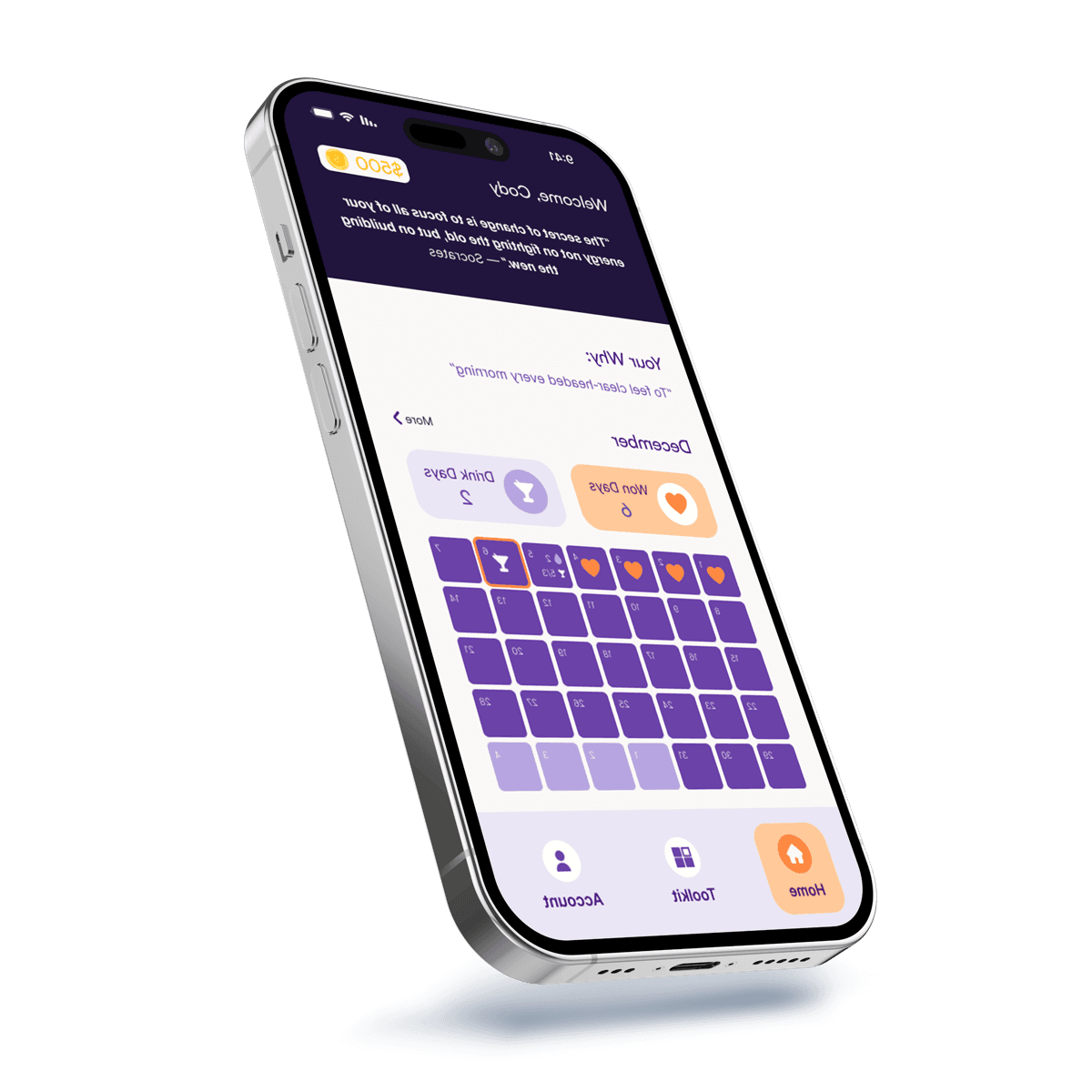
If one or two of those landed, Alcohol Reboot takes a couple of taps to log a drink and two weeks to show you your real pattern. No goal required to start. Available on the App Store and Google Play.