Blogs
What Is an Alcohol Tracker and How Does It Work?

An alcohol tracker is an app that records every drink you have and shows you the pattern underneath them. When you drink, how much, and what's usually going on around it. Some people call it a drink tracker, others a drink tracking app. Same idea: you log, it counts, you see what's actually happening.
What it isn't is a program telling you to quit. Most people who use one are just trying to cut back on drinking a bit, on their own terms, and want real numbers instead of a vague sense that it's “probably fine.”
Here's how they work, and what separates a useful one from an app you delete in week two.
What an Alcohol Tracker Actually Does
Strip away the marketing and there are three functions. Everything else is built on top of these.
It Logs Your Drinks in Seconds
You log a drink when you have it. A beer at dinner, a glass of wine after work, two more than you planned on a Friday. It takes a few taps and then you put your phone down.
Sounds almost too basic to matter. It's the whole foundation. Everything the app can eventually tell you comes from these small entries piling up.
It Turns Logs Into Patterns
This is where a tracker earns its place on your phone. After a few weeks, your logs stop being a list and start being a shape. Thursday is heavier than you thought. Weeknights account for more than half your total. The month you described as “quiet” had 46 drinks in it.
A good tracker also shows you the context, not just the count. What time you tend to pour, which days cluster, what's usually happening around the drink. Counts tell you how much. Context tells you where to actually push.
Set a Drink Limit, Not a Target
You pick a weekly or monthly drink limit, and the tracker shows you where you stand against it.
Worth saying clearly, because people get this backwards: a limit is a ceiling, not a goal to hit. Ten drinks a week doesn't mean you owe the app ten drinks. Six is better. Four is better than six.
Less is always better. Every drink you skip counts, and there's no fine print on that.
How to Track Your Drinking Without Overthinking It
People quit tracking for one reason: they made it complicated. The routine that survives looks like this.
Log in the moment, not the next morning. Reconstructing a night at 9am is guesswork, and guesswork always rounds down. Log honestly, including the big pours, because nobody sees this but you and a flattering record is worthless. Set a limit you'd actually keep rather than an aspirational one you'll blow past by Wednesday. Then check your patterns once a week, five minutes, and look at what the week actually was instead of what it felt like.
Adjust as you go. If your limit feels easy after a month, lower it. That's the point.
Why a Drink Tracking App Beats Guesswork
Almost everyone underestimates how much they drink, and it isn't dishonesty. Population surveys that ask people what they drank consistently account for only about half of the alcohol actually sold in the same period. Half of it goes unreported, not because people lie, but because drinks blur. You remember the night; you don't remember the fourth glass.
Tracking closes that gap. And the difference in what you can do with it is enormous:
- “I should probably drink less” is a mood.
- “I had 14 drinks last week and 9 were on weeknights” is a plan waiting to happen.

One number worth having in your head while you log: in the US, a standard drink is 14 grams of pure alcohol. That's a 12 oz beer at 5%, a 5 oz glass of wine at 12%, or a 1.5 oz shot of spirits at 40%. Most pours at home are bigger than the official version, so a generous glass of wine is closer to two drinks than one. Log it that way.
What to Look For in a Drink Tracker
If you're comparing apps, this is roughly the order that matters.
Fast Logging Above Everything Else
Every other feature is worthless if you stop logging, and friction is what makes people stop. If entering a drink takes more than a few taps, that app will be dead on your phone inside two weeks. Test this before you commit to anything else.
After that, look for:
- Patterns, not just totals. A weekly sum is a scoreboard. A pattern is something you can change.
- Goals you set yourself. Skip anything that assumes everyone is aiming at zero. Your limit should be yours.
- Something to do in the hard moment. The urge shows up at 7pm and a number on a screen doesn't help much. Practical tools matter here: breathing exercises, a place to write, mocktail ideas, short self-hypnosis audio sessions. Anything that gives the moment somewhere else to go.
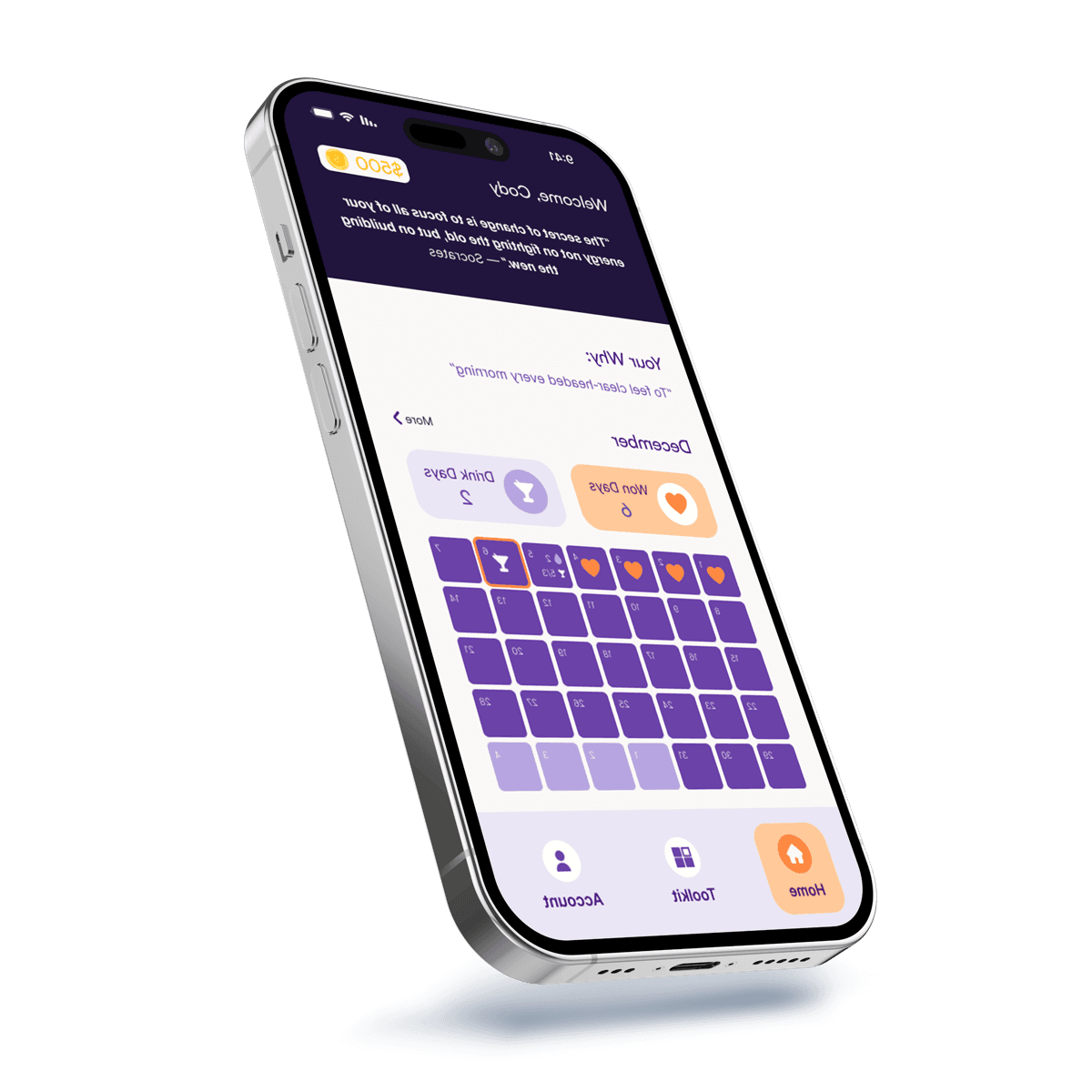
- Visible progress. Alcohol-free days adding up, a streak, a trend heading the right way. Seeing progress is what keeps you logging in month three.
- Privacy. No feed, no audience, no one reviewing your week. Your log should be for you.
That list is more or less the blueprint Alcohol Reboot was built from: log a drink in seconds, watch the pattern surface, set your own limit, and have real tools for the evenings when the number alone isn't enough.
Alcohol Tracker vs. Sobriety App: What's the Difference?
These get lumped together in search results and they're built for different people.
A sobriety app is designed around stopping completely: day counters, abstinence milestones, a community you check in with. An alcohol tracker is designed around awareness and moderation. It doesn't have an opinion about whether you drink. It has data about how you drink, and it lets you decide what to do with it.
If your goal is fewer weeknight drinks, a lid on weekends, or simply finding out what your real number is, you want a tracker. It doesn't start from the assumption that something's wrong with you. It starts from the assumption that you'd rather know.
How Long Before You See Patterns?
Two to four weeks of consistent logging. That's the honest answer. Under two weeks you have data points; past two weeks you have a shape.
Most people find something they didn't expect in that first month, and that's usually where the cutting back starts. Not from pressure or a rule someone handed you, but from seeing the thing clearly and deciding you'd rather it looked different.
FAQ
No. A budgeting app isn't only for people in debt. Most people tracking their drinks just want to drink a little less and would rather work from numbers than from a feeling.
No. Trackers are built for moderation. You set your own drink limit and you decide what “less” means for you.
In the US: a 12 oz beer at 5%, a 5 oz glass of wine at 12%, or a 1.5 oz shot of spirits at 40%. All three contain about 14 grams of pure alcohol. Home pours usually run larger, so log generously.
Log what you remember and keep going. A record with a gap in it still beats no record. Consistency, not perfection.
In Alcohol Reboot, your logs are yours. There's no community feed and nobody reviewing your drinks. It's a private record.
Often, yes, and usually before you try to change anything. Knowing you'll log it changes the decision in the moment. That's not willpower, it's just attention.
If you want to see your real numbers instead of your rough estimate, Alcohol Reboot is on the App Store and Google Play. Start with one thing: log the next drink you have.